
Septic · Northeast Florida
Septic services
Pumping, inspections, drain fields, new systems and emergencies. Licensed technicians, the county permit pulled for you, and a straight answer about what your system is doing.
Crews with 20+ years in the tradeLicensed & insuredOne-year warranty
Septic backing up? Call us now.
Sewage in the yard or the house, a tank that won’t drain, or a well with no water. Call and you will get a person and a straight answer about when we can be there.
Most expensive septic work is preventable
The drain field is the part you do not want to replace, and the most common reason it fails is solids carried out of a tank that was not pumped on schedule. A pump-out every three to five years is the cheapest insurance in the trade.
The second most common reason is local rather than behavioural: a wet-season water table high enough to saturate the field from below. That one is not preventable by maintenance, but it is predictable, and it is why a system that copes in May starts backing up in September.
What Northeast Florida ground does to a septic system
Fast-draining sand sounds ideal and is not automatically so. A drain field needs enough unsaturated soil beneath it to treat effluent before that effluent reaches groundwater. Sand that moves water away quickly, or a water table sitting close to the surface, takes that depth away.
Those two facts drive nearly every design decision here. They set the size of the field, whether a conventional gravity system is permittable at all, and whether a lot needs a mound system or an aerobic treatment unit instead.
Who issues your permit right now
Florida moved the onsite sewage program from the Department of Health to the Department of Environmental Protection on 1 July 2021. DEP has taken permitting over in the 16 Northwest Florida counties and Marion County so far, and has not published a schedule for the rest of the state.
For Duval, Clay, Nassau, St. Johns and Putnam today, that means the county health department still issues the permit. We pull it, we schedule the inspections, and we deal with whichever office holds the file when your job is in front of it.
Septic services
Septic
Septic tank pumping
The single job that prevents most of the expensive ones. A tank that is pumped on schedule protects the drain field, and the drain field is the part you do not want to replace.
Read more →Septic
Septic inspections
Most inspections we run are tied to a closing date, and a closing date does not move because a tank was hard to find. Book the inspection early enough that a repair is still an option.
Read more →Septic
New system installation
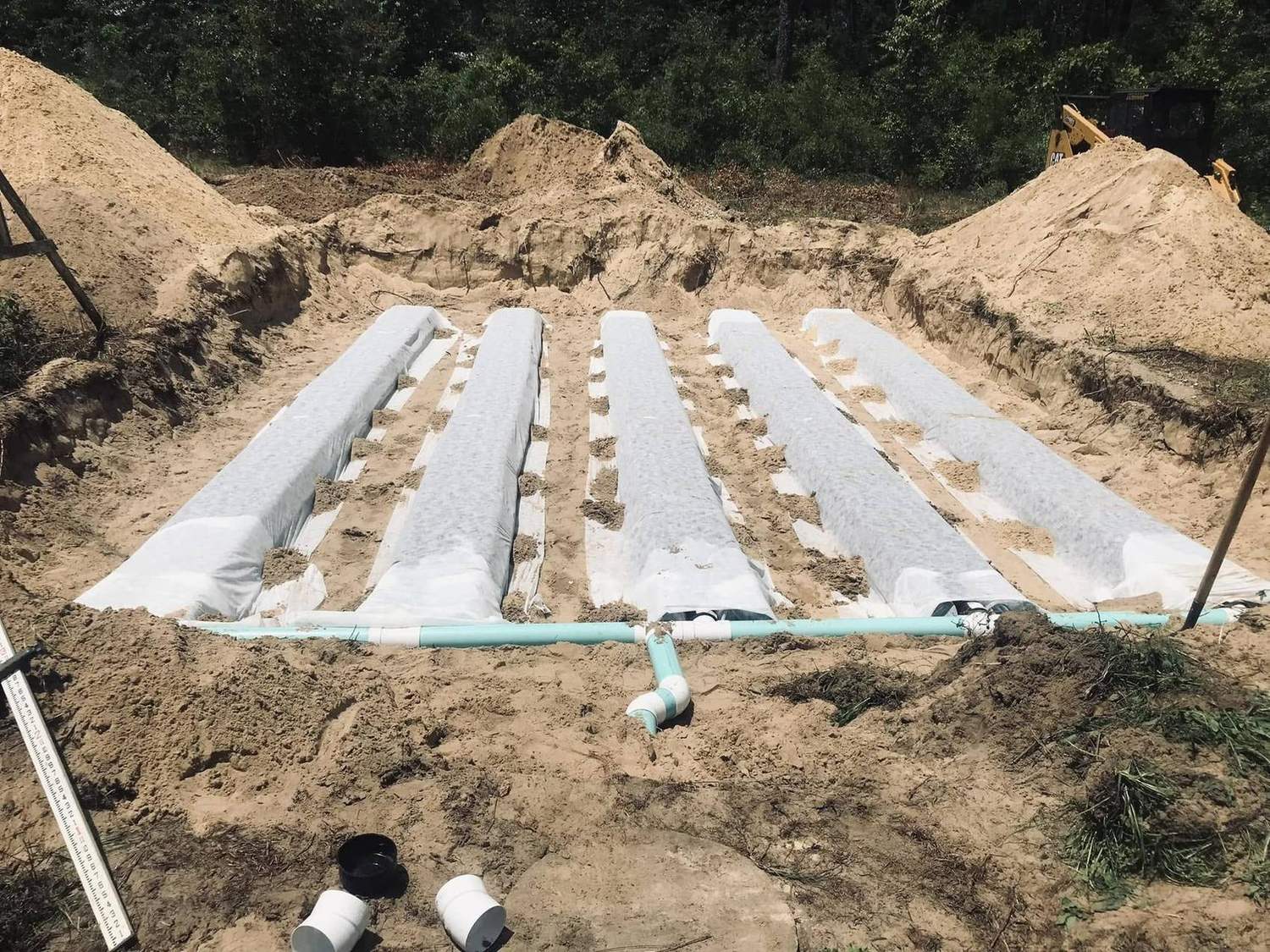
New construction, a replacement for a system at the end of its life, or an upgrade a county requires. All three start in the same place: what the soil and the water table on your lot will accept.
Read more →Septic
Drain field repair
The most expensive part of a septic system, and the one most often killed by a pump-out that was put off. If the yard is wet and the tank refills fast, this is the conversation.
Read more →Septic
Aerobic treatment units
On coastal and low-lying lots, and inside Florida’s nutrient-reduction areas, a conventional system is often not an option. This is what the alternative is and what owning one involves.
Read more →Septic
Septic pump repair
If an alarm is sounding at the tank, the pump that moves wastewater to the drain field has stopped keeping up. That is a problem with a clock on it, because the tank keeps filling either way.
Read more →Septic
Emergency service
Sewage coming back into the house, or surfacing in the yard, is not a next-week problem. Call and we will tell you what to do in the meantime, and give you a straight answer on when we can be there.
Read more →How our estimates work
Some jobs we can price on the phone. The big ones nobody can, and we would rather tell you why than invent a number.
- 01
A ballpark on the first call
A range for a property like yours, and a straight answer on what would move it. Not a commitment, and we will say so.
- 02
A written estimate for the part we can price
On permitted work that means the site evaluation, the soil testing and the permit. You get it in writing, so the job can start.
- 03
A crew out to the site
The evaluation happens on site. The results are what the county needs and what your final number depends on.
- 04
The firm number, once it is knowable
With the soil results and the permit in hand, the price for the actual work is real rather than a guess with a margin built in.
Septic questions Northeast Florida homeowners ask
How often should a septic tank be pumped in Northeast Florida?
Most households need pumping every three to five years. Tank size, the number of people in the house, garbage disposal use and whether the system has a pump chamber all move that interval. Ground conditions count too, because a drain field that stays saturated will show problems sooner than one that drains freely.
Who issues a septic permit in Duval, Clay, Nassau, St. Johns or Putnam County?
Today the county health department issues it. Florida moved the onsite sewage program from the Department of Health to the Department of Environmental Protection on 1 July 2021. DEP has since taken over permitting in the 16 Northwest Florida counties and Marion County. Northeast Florida has not transitioned, and DEP’s own guidance is that county health departments continue to handle permitting and inspections until it does.
How do I know if my drain field is failing or my tank is just full?
Watch what happens after a pump-out. If the tank empties and then refills quickly while the drains are still slow, water is not leaving the drain field and the field is the problem. If the tank stays empty and everything drains normally, it was simply full.
Why does my septic system back up after heavy rain?
A high wet-season water table can saturate the drain field from below, leaving it nowhere to discharge. A field that copes in the dry season may not cope after sustained rain. If your backups track the weather, the drain field is the thing to evaluate rather than the tank.
Is a septic inspection required to sell a house in Florida?
Florida does not require a state-level septic inspection at the point of sale, but lenders, buyers and their agents commonly require one as a condition of the contract, and some loan programs will not close without it. Book it early enough that a repair is still negotiable rather than a closing-week emergency.
Tell us what the system is doing.
Call and talk to someone who works on these every day, or send the details and we will come back to you.