
Septic service
Aerobic Treatment Units Jacksonville
On coastal and low-lying lots, and inside Florida’s nutrient-reduction areas, a conventional system is often not an option. This is what the alternative is and what owning one involves.
Crews with 20+ years in the tradeLicensed & insuredOne-year warranty
Septic backing up? Call us now.
Sewage in the yard or the house, a tank that won’t drain, or a well with no water. Call and you will get a person and a straight answer about when we can be there.
What an ATU does differently
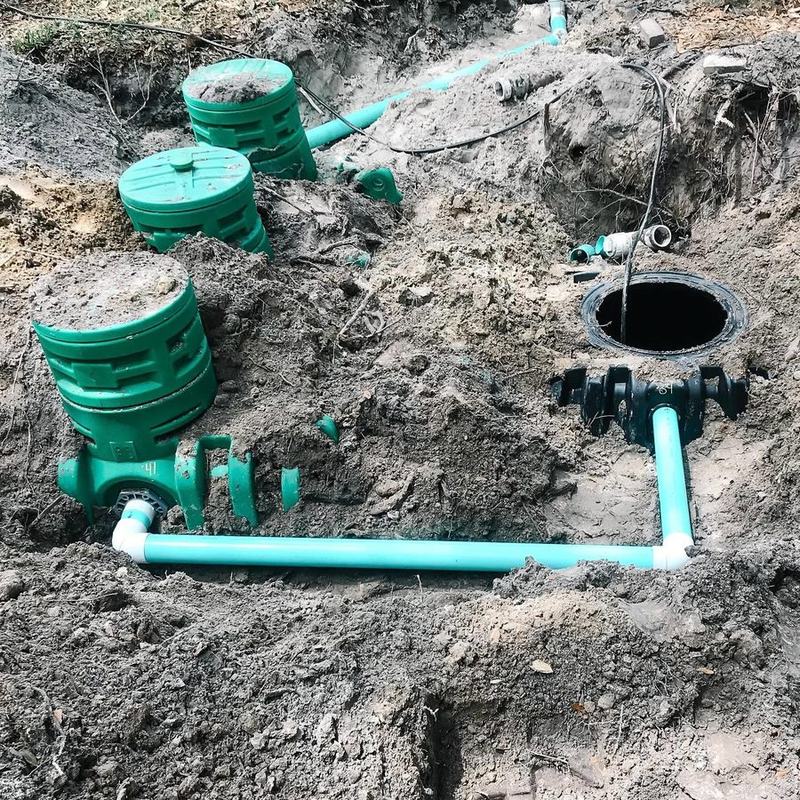
A conventional septic tank settles solids and lets the liquid discharge to the drain field. An aerobic treatment unit adds oxygen to the chamber, which supports bacteria that break down waste far more thoroughly before it ever reaches the field.
The output is cleaner. That is the entire point: it is what allows a system to work on a lot where a conventional field would not be permitted, and it is what satisfies enhanced nutrient reduction requirements where those apply.
When Florida requires one
Two situations drive it. The first is the lot: a high wet-season water table, a small parcel, or proximity to surface water can make a conventional field unpermittable, and an ATU becomes the way to build.
The second is the law. House Bill 1379 took effect on 1 July 2023. One part of that act covers new septic systems in three kinds of water quality plan area. Those are a reasonable assurance plan, a pollution reduction plan and a basin management action plan area. Which rule applies depends on the sewer. Where a lot can connect to a publicly owned or investor-owned sewerage system, a new septic system is barred outright. Where it cannot, and the lot is 1 acre or less, a conventional system is not enough. The system has to be an enhanced nutrient-reducing one, or another that reaches at least 65 percent nitrogen reduction. The statute defines an enhanced nutrient-reducing system by performance, and it names no system types. It asks for state approval that a system cuts total nitrogen by at least 50 percent before the drain field. Approval also covers a cut of 65 percent or more across the tanks and drain field combined. The Department of Environmental Protection names three system types that can meet it. A nitrogen-reducing aerobic treatment unit is one of the three. Whether your lot sits inside one of those plan areas has a definite answer, and it is worth getting before you plan a new system or a replacement.
What ownership involves
An ATU has moving parts a conventional system does not: an air pump, and usually an alarm. It requires a maintenance agreement and periodic servicing, and that is not optional paperwork. A unit whose air pump has quit is no longer treating anything, and the owner often does not know until an inspection or a smell says so.
- Scheduled service visits with the treatment components checked
- Air pump and diffuser inspection and replacement when needed
- Alarm and control panel testing
- Effluent quality checked against what the system is meant to deliver
- Tank pumping on the same interval logic as a conventional system
Whose systems we service
We install Fuji aerobic treatment units, and we service the Fuji units we installed. If your ATU was put in by somebody else, we are not the right people to maintain it — these systems vary a great deal by manufacturer and the servicing relationship usually sits with whoever installed it.
Say so on the first call and we will tell you straight away rather than booking a visit that goes nowhere. If you are replacing a failed system entirely, that is a different conversation and one we can help with.
If you inherited one
Buyers regularly find out at closing that a property has an ATU rather than a conventional system, and that it carries a maintenance obligation. The first questions are whether the unit has been serviced, whether the alarm works, and whether the agreement is current.
If we installed the unit, we can pick the servicing up and answer all three. If somebody else did, the honest answer is that the servicing relationship belongs with whoever put it in, and we will point you toward someone who works on that make. Call either way and we will tell you which one you are dealing with rather than leaving you to guess.
Where we do this work
We handle aerobic treatment units across Duval, Clay, Nassau, St. Johns, Putnam, Union and Baker counties. Each area page covers the local ground conditions and which office issues the permit there.
Jacksonville · St. Augustine · Orange Park · Middleburg · Green Cove Springs · Ponte Vedra Beach · Fernandina Beach · Yulee
See every area we serve, all septic services, or who issues your permit.
Aerobic treatment units — questions we get asked
What is an aerobic treatment unit?
An aerobic treatment unit adds oxygen to the treatment chamber, which supports bacteria that break waste down far more thoroughly than a conventional septic tank does before the liquid reaches the drain field. The output is cleaner, which is what allows a system to work on lots where a conventional drain field would not be permitted.
When does Florida require an aerobic treatment unit instead of a conventional septic system?
Two situations drive it. A high wet-season water table, a small lot or proximity to surface water can make a conventional drain field unpermittable, and an ATU becomes the way to build. The other is House Bill 1379. It took effect on 1 July 2023. It covers new septic systems in three kinds of plan area. The three are a basin management action plan area, a pollution reduction plan and a reasonable assurance plan. Sewer settles which rule applies. If a publicly owned or investor-owned sewerage system is available to the lot, no new septic system is allowed. If it is not available, a lot of 1 acre or less needs an enhanced nutrient-reducing system. Any other system that cuts nitrogen by at least 65 percent works too. That is a standard of performance, not a product. The act names no system types at all. The Department of Environmental Protection does, and it names three. A nitrogen-reducing aerobic treatment unit is one of them.
Does an aerobic treatment unit need a maintenance contract?
Yes. An ATU has an air pump and usually an alarm, and it requires scheduled servicing under a maintenance agreement. This is not paperwork you can let lapse safely: a unit whose air pump has failed is no longer treating anything, and most owners do not find out until an inspection or a smell tells them.
How is an ATU different from a conventional septic system to own?
It has moving parts and an electrical supply, so it needs periodic service, air pump and diffuser checks, and alarm testing on top of the tank pumping a conventional system needs. In exchange it treats waste to a much higher standard and can be permitted on lots where a conventional field cannot.
Related services
Septic
New system installation
New construction, a replacement for a system at the end of its life, or an upgrade a county requires. All three start in the same place: what the soil and the water table on your lot will accept.
Read more →Septic
Septic inspections
Most inspections we run are tied to a closing date, and a closing date does not move because a tank was hard to find. Book the inspection early enough that a repair is still an option.
Read more →Septic
Emergency service
Sewage coming back into the house, or surfacing in the yard, is not a next-week problem. Call and we will tell you what to do in the meantime, and give you a straight answer on when we can be there.
Read more →Tell us what the system is doing.
Call and talk to someone who works on these every day, or send the details and we will come back to you.