
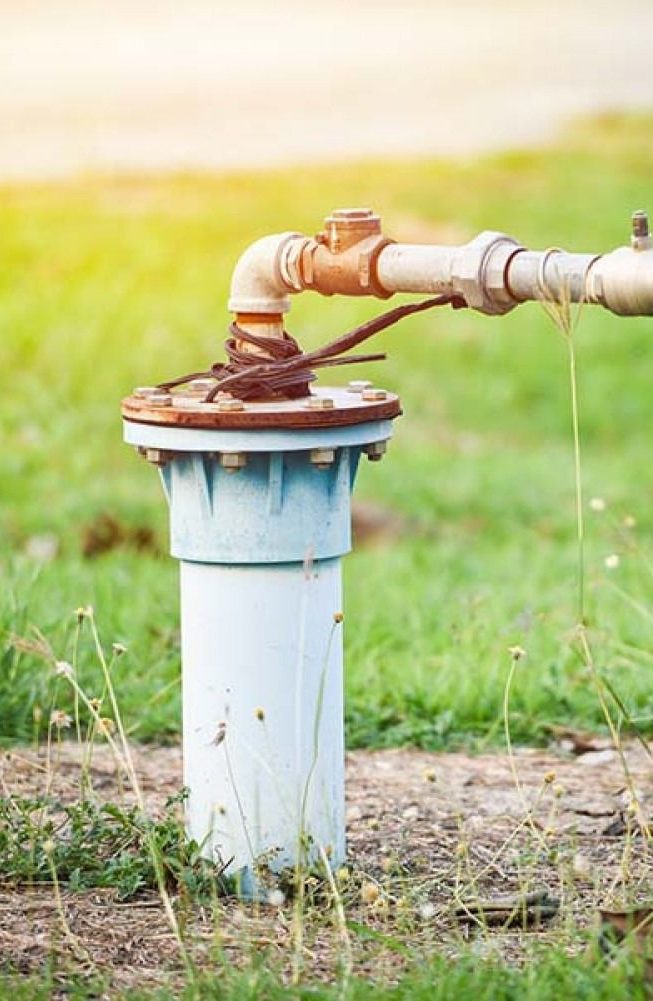
Water wells
Well Pump Repair Jacksonville
No water at all, or pressure that comes and goes. Before anything gets replaced, the job is working out which component failed, because the wrong guess is an expensive one.
Crews with 20+ years in the tradeLicensed & insuredOne-year warranty
No water? Call and we will tell you what it sounds like.
A well that has stopped delivering, pressure that has dropped away, or a pump that will not shut off. Call and you will get a person and a straight answer about when we can be there.
Is it the pump or the pressure tank?
This is the question that decides the bill, and it is worth understanding before anyone quotes you.
A pump that has failed usually means no water at all, or water that runs briefly and stops. A pressure tank that has failed usually means water that is still there but arrives in bursts, with the pump switching on and off rapidly every time a tap opens. That rapid cycling is the classic signature of a waterlogged tank, and replacing the pump will not fix it.
There is a third possibility that costs nothing to check: the pressure switch or the breaker. Those are worth ruling out first, every time, because it is not unusual for a no-water call to end there.
What we see most often
- Pressure switch failed or the contacts burned
- Pressure tank waterlogged, so the pump short-cycles
- Check valve failed, letting the column of water drain back down the well
- Pump motor or capacitor failed
- Wiring or splice failure down the well
- Well screen or the pump itself fouled by iron or sediment
When repair beats replacement
A pressure switch, a check valve or a capacitor is a repair, and it is a fraction of the cost of a new pump. A motor that has failed on a pump that is already near the end of its service life is different, and pulling the same pump twice in two years costs more than replacing it once.
Knowing which situation you are in — including when the answer is the cheaper one — is the whole point of working it out before anyone quotes you.
Losing pressure but not water
Gradual pressure loss across the whole house, without the rapid on-off cycling, often points at a pump that is wearing out or a well that is producing less than it did. Iron and sediment fouling can also restrict flow over time. Those are diagnosable, and they are worth catching before the pump quits entirely on a Sunday.
Our well work, and where it stops
We drill new wells and look after the ones already in the ground. That covers the pump, the pressure or bladder tank, the switches and wiring that go with them, water testing, and inspections for a home sale. We do not sell or fit water treatment equipment.
Treatment is a separate trade, and we would rather say so up front than leave you guessing. If your water needs it, call anyway. We will tell you what you are looking at and point you at the right trade.
Where we do this work
We handle well pump repair across Duval, Clay, Nassau, St. Johns, Putnam, Union and Baker counties. Each area page covers the local ground conditions and which office issues the permit there.
Jacksonville · St. Augustine · Orange Park · Middleburg · Green Cove Springs · Ponte Vedra Beach · Fernandina Beach · Yulee
See every area we serve, all water well services, or who issues your permit.
Well pump repair — questions we get asked
How do I know if my well pump or my pressure tank has failed?
A failed pump usually means no water at all, or water that runs briefly then stops. A failed pressure tank usually means water still arrives but in bursts, with the pump switching on and off rapidly each time you open a tap. That rapid cycling is the signature of a waterlogged pressure tank, and replacing the pump will not fix it.
I have no water from my well. What should I check first?
Check the breaker and the pressure switch before assuming the pump has failed. A tripped breaker or a burned set of switch contacts produces exactly the same symptom as a dead pump and costs a great deal less to put right. It is not unusual for a no-water call to end there.
Why does my well pump keep turning on and off?
Rapid cycling almost always means the pressure tank has lost its air charge and become waterlogged, so it can no longer hold pressure between pump cycles. Left alone it wears the pump out early, because the motor is starting many times more often than it was designed to.
Is my water pressure problem the pump or the well?
Gradual pressure loss across the whole house, without rapid cycling, can be a pump wearing out, a well producing less than it once did, or iron and sediment restricting flow. Those are distinguishable on site, and worth diagnosing before the pump fails completely.
Related services
Wells
Well pump replacement
A replacement pump is not a like-for-like part swap. Sizing it to the well and the household is what decides whether you get fifteen years out of it or three.
Read more →Wells
Pressure tanks
The least understood component on a well system, and the one whose failure quietly destroys the most expensive one.
Read more →Wells
Well inspections
A well inspection is usually bought against a closing date, and a closing date does not move because the well turned out to have a problem. Book it early enough that a repair is still an option.
Read more →Tell us what the system is doing.
Call and talk to someone who works on these every day, or send the details and we will come back to you.