
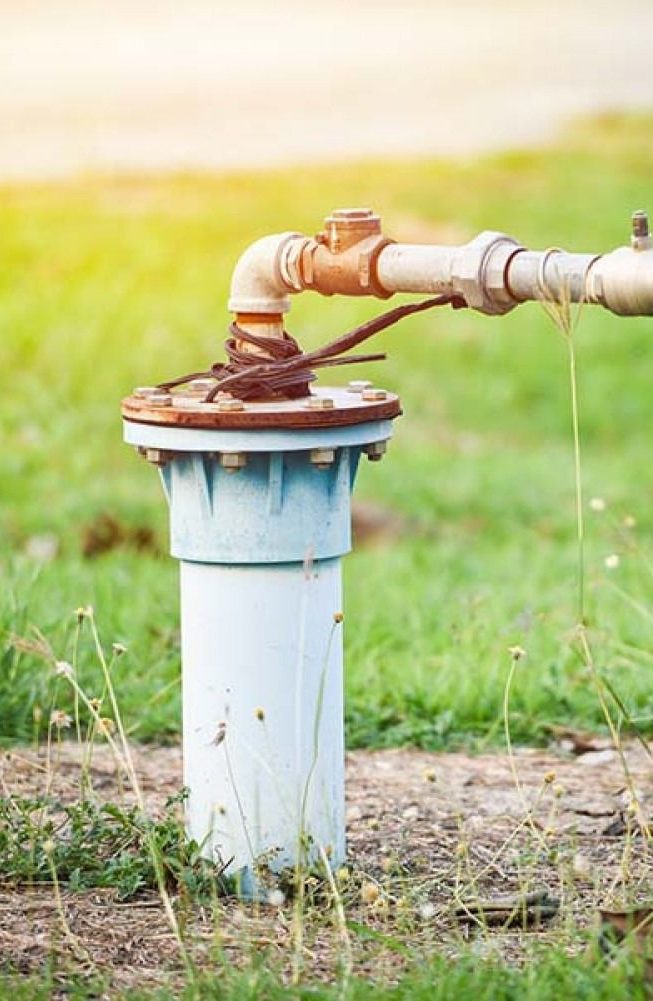
Water wells
Well Water Testing Jacksonville
A private well is not covered by the testing a public utility does. Nobody is checking your water except you, and there is no notification when something changes.
Crews with 20+ years in the tradeLicensed & insuredOne-year warranty
No water? Call and we will tell you what it sounds like.
A well that has stopped delivering, pressure that has dropped away, or a pump that will not shut off. Call and you will get a person and a straight answer about when we can be there.
How often should a private well be tested?
Annually for bacteria and nitrates is the standard advice, and it is sound. Test sooner than that if anything changes: taste, smell, colour, or a nearby event like flooding, new construction, or a septic system failing in the neighbourhood.
Test at a change of ownership too. A buyer taking on a private well is taking on an unknown, and it is a cheap thing to resolve before closing rather than after.
What to test for
- Total coliform and E. coli, which indicate the well may be taking in surface contamination
- Nitrates, which matter most where there are septic systems, agriculture or fertiliser nearby, and which are a specific risk to infants
- Iron and sulfur, which are common in this part of Florida and are usually a taste, smell and staining problem rather than a health one
- pH and hardness, which drive corrosion and scale in your plumbing and appliances
- Total dissolved solids, and chlorides where saltwater intrusion is a concern near the coast
Why well-and-septic properties are a special case
If your property has both, they are two halves of one water system. A failing drain field is a potential contamination source for a well on the same lot, which is exactly why Rule 62-6.005 of the Florida Administrative Code, in the version that took effect on 8 June 2026, which puts a septic system no closer than 75 feet to a private potable well exists.
A great many Northeast Florida properties have both. If a test comes back with bacteria present, the septic system is one of the first things worth ruling out — and that part is squarely our work.
If the test comes back positive
Bacteria in a well is usually fixable. Shock chlorination resolves many cases, and where it does not, the cause is generally physical: a damaged casing, a bad well cap, or surface water reaching the well. Those are findable. What matters is not stopping at a treatment that masks the result while the entry point stays open.
Our well work, and where it stops
We drill new wells and look after the ones already in the ground. That covers the pump, the pressure or bladder tank, the switches and wiring that go with them, water testing, and inspections for a home sale. We do not sell or fit water treatment equipment.
Treatment is a separate trade, and we would rather say so up front than leave you guessing. If your water needs it, call anyway. We will tell you what you are looking at and point you at the right trade.
Where we do this work
We handle well water testing across Duval, Clay, Nassau, St. Johns, Putnam, Union and Baker counties. Each area page covers the local ground conditions and which office issues the permit there.
Jacksonville · St. Augustine · Orange Park · Middleburg · Green Cove Springs · Ponte Vedra Beach · Fernandina Beach · Yulee
See every area we serve, all water well services, or who issues your permit.
Well water testing — questions we get asked
How often should I test my private well water?
Test annually for bacteria and nitrates. Test sooner if the taste, smell or colour changes, after flooding, after nearby construction, or if a septic system nearby has failed. Also test at a change of ownership, since a buyer is otherwise taking on an unknown.
What should Northeast Florida well water be tested for?
Total coliform and E. coli, nitrates, iron and sulfur, pH and hardness, and total dissolved solids, with chlorides added where saltwater intrusion is a concern near the coast. Iron and sulfur are common here and are usually a taste, smell and staining issue rather than a health one.
Can my septic system contaminate my well?
It can, which is why Florida sets minimum separation distances between an onsite sewage system and a private potable well in Rule 62-6.005 of the Florida Administrative Code, in the version that took effect on 8 June 2026, which puts a septic system no closer than 75 feet to a private potable well. A failing drain field on the same lot as a well is a genuine contamination pathway, and bacteria in a test result on a well-and-septic property should always put the septic system into the investigation.
What happens if my well tests positive for bacteria?
Shock chlorination resolves many cases. Where it does not, the cause is usually physical: a damaged casing, a failed well cap, or surface water reaching the well. Those causes are findable, and treating the symptom while the entry point stays open is not a fix.
Related services
Wells
Well inspections
A well inspection is usually bought against a closing date, and a closing date does not move because the well turned out to have a problem. Book it early enough that a repair is still an option.
Read more →Septic
Septic inspections
Most inspections we run are tied to a closing date, and a closing date does not move because a tank was hard to find. Book the inspection early enough that a repair is still an option.
Read more →Wells
Well pump repair
No water at all, or pressure that comes and goes. Before anything gets replaced, the job is working out which component failed, because the wrong guess is an expensive one.
Read more →Tell us what the system is doing.
Call and talk to someone who works on these every day, or send the details and we will come back to you.